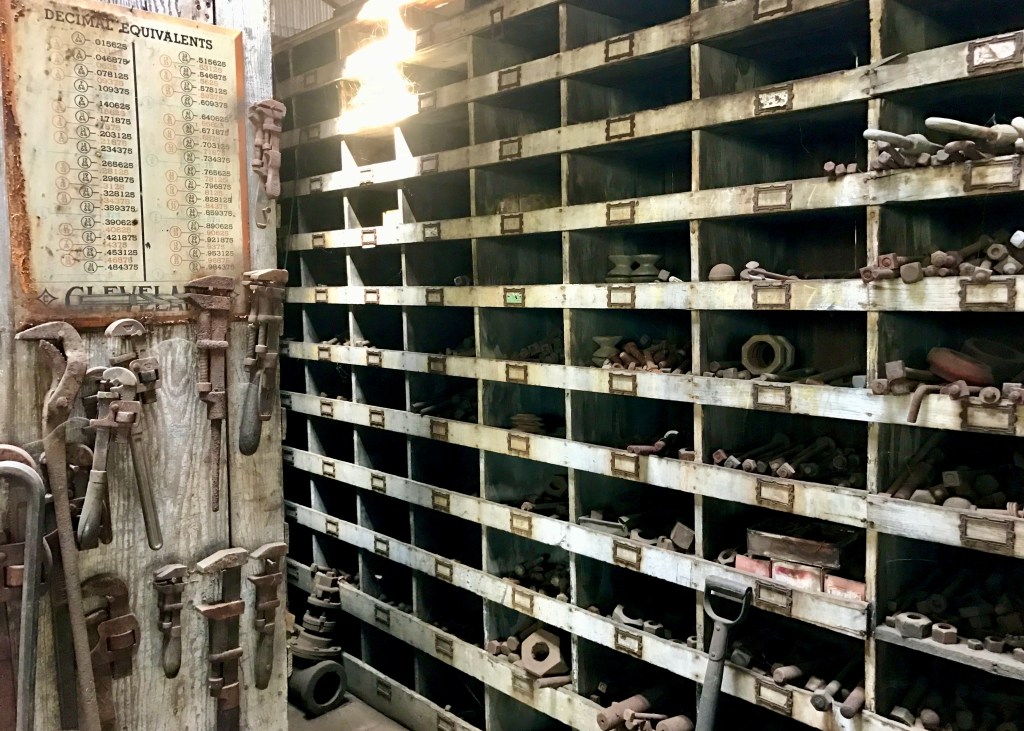
I’ve long been obsessed with the 19th century’s western frontier, from the breathtakingly hardy (and on occasion foolhardy) pioneers who trekked the Oregon Trail to the Gold Country towns of the California foothills. Take Sutter Creek, for example, a tiny Gold Rush-era town that offers great little restaurants, charming B&Bs, wine tasting rooms and a water-powered iron foundry that dates back to 1873. I’ve written reams on the topic of California Gold Rush towns during my years as a features reporter and editor — think food, travel and lifestyle coverage — and it was always a delight.
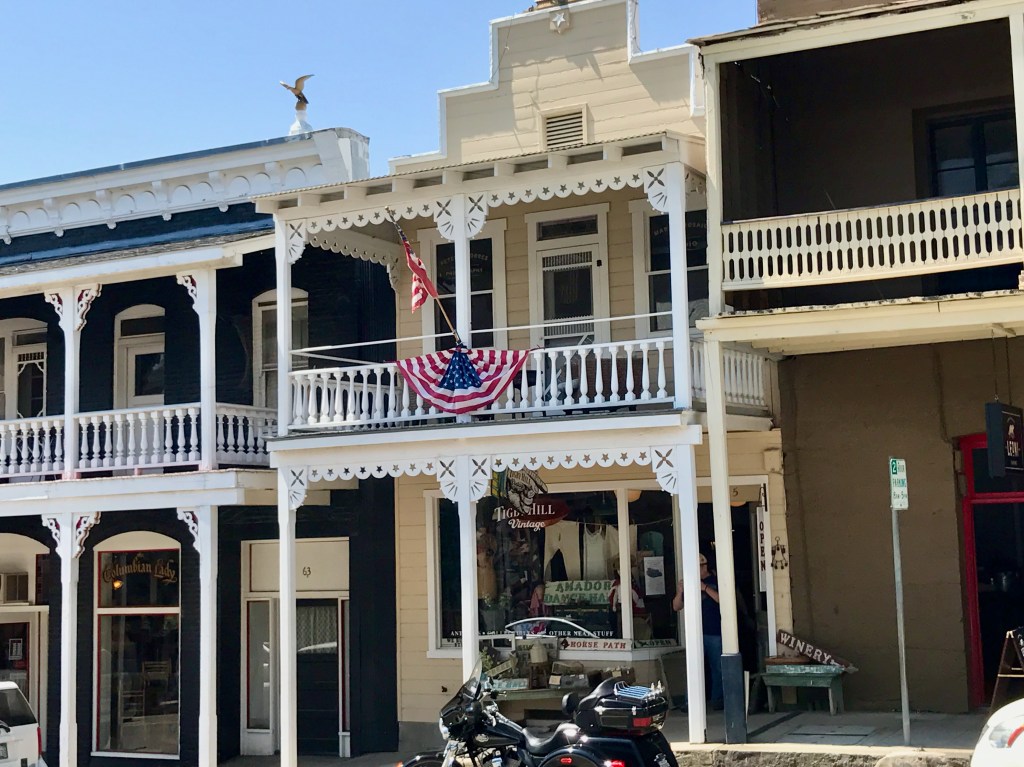
Main Street in Sutter Creek, California, offers a blast to the 19th-century past, as well as restaurants, cafes, wine tasting stops and an iron foundry that dates back to 1873. (All images © Jackie Burrell)
My kids would tell you that my current writing project, a historical murder mystery set on the Oregon Trail in 1849, began even further back than my obsession with the trail. One of our family’s favorite vacation destinations was a (sadly now long gone) pioneer camp in the California foothills where for three years running, we rode covered wagons, dressed in 1850s-appropriate garb, stitched moccasins, dipped beeswax candles and learned survival skills I hope we will never have to actually use. (We’re not terrible at flint-and-steeling a campfire, but we’re not exactly efficient, although we can shout “Tarnation!” and “Fiddlesticks!” with the best of them. The mountain men teaching that session could start a fire with a single strike of flint against steel.)
But back to that iron foundry and the adorable town. Sutter Creek was settled in 1848 by John Sutter — yes, that one, the founder of Sutter’s Fort in Sacramento and Sutter’s Mill, where gold was first spotted by carpenter James Marshall in the mill traces. (Don’t get too comfortable with the idea of Sutter as hero. The man was … complicated. The German-born entrepreneur abandoned his wife and five children in Switzerland to avoid prison time, before sailing for the New World, and his exploits in Alta California included enslaving Native Americans, impersonating a Swiss officer and defying the Mexican governor, who oversaw California at the time. He sent supplies to the Donner Party, though. Anyway…)
Sutter Creek’s Knight Foundry is astonishing. You can read the full story I wrote for the Mercury News a few years back, but here’s just a taste:
Long narrow belts whir across the ceiling of the cavernous structure, the sound buzzing, thrumming and reverberating through the warm, dusty air. You may not see the rush of water powering this 19th-century hydroelectric foundry, but there’s no mistaking the effect as giant wheels, gears, lathes and planers glide into motion. Sutter Creek’s Knight Foundry is the last of its kind — and for Gold Rush history buffs, it’s absolute catnip.For most of us, the Gold Rush conjures images of sailing ships, tent encampments and grizzled prospectors panning for gold on riverbanks. (Some not-so-grizzled, modern-day gold hunters still do that here in the Sierra foothills, where even hardware stores stock panning supplies.) But Samuel N. Knight’s foundry, which opened in 1873 at the height of the gold boom’s second wave, is staffed by prospectors of the past.
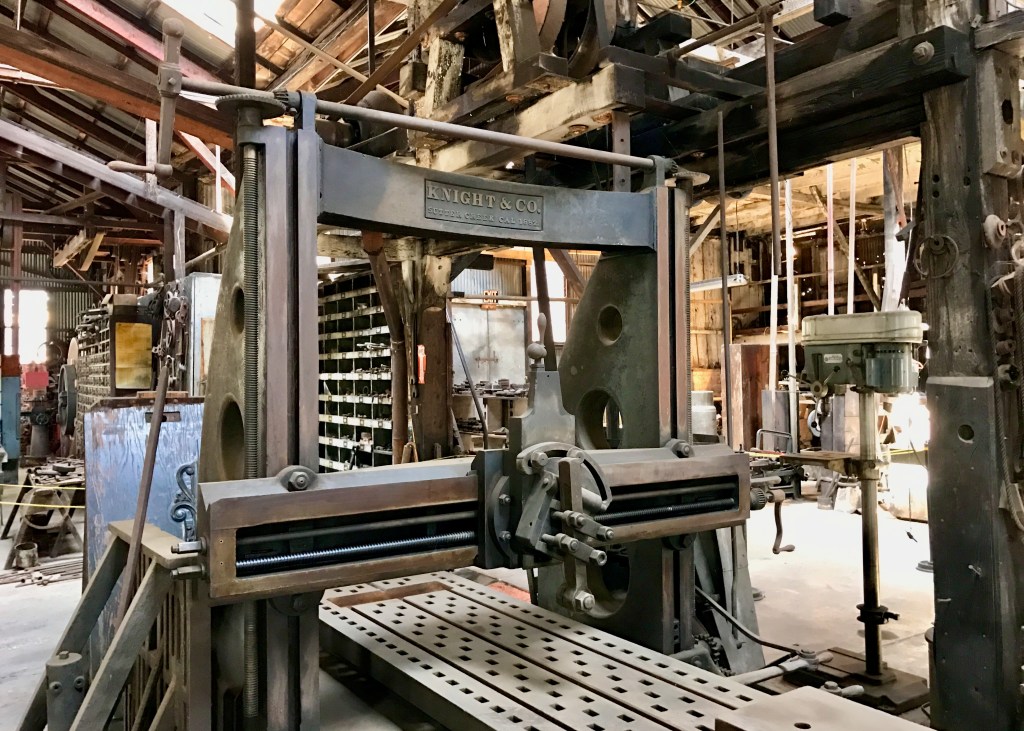
Drive down Eureka Street, just off Old Highway 49, and you’ll spot the foundry’s corrugated metal structures — the transition from original wood to metal sheathing motivated by a fire a century ago. Inside, time stands still. It looks as if the foundry’s artisans and workers just stepped away from this warren of stacked molds and woodworking equipment, powered by Knight’s then-revolutionary 42-inch cast-iron water wheel. You can still see the cupola furnace that once heated iron to 2,800 degrees and the green-sand molds used to shape those molten metal streams into not just equipment for the vast Sierra mines, but ever-greater water wheels used to generate electricity in Oregon, Utah and California.
The foundry is open on the second and fourth Saturdays of each month year-round. Check out the possibilities at https://knightfoundry.com/sutter-creek-historic-site-events/. (And yes, the water wheel will be running. Get ready to be amazed.)
 Jackie Burrell
Leave a comment