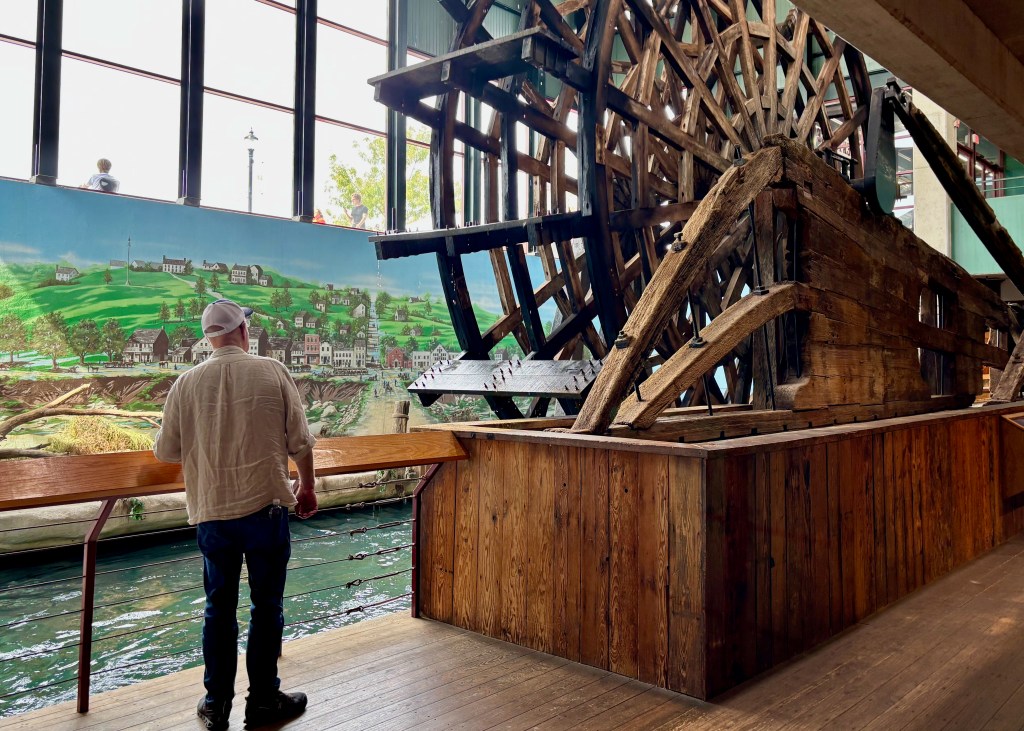
Here on the West Coast, the word “shipwreck” conjures visions of the square-riggers, schooners and clippers that foundered on the Pacific coast in the pre-lighthouse days. And the Titanic, of course. Can’t forget that one. But back in 1856, the Missouri River was a treacherous place for steamboats. Snags — downed trees and tangled branches — lurked just beneath the surface. When the Arabia hit a bad one on Sept. 5, 1856, she was carrying 150 passengers and 222 tons of cargo, a floating Costco’s worth of supplies for pioneers and frontier mercantiles.
The ship sank within minutes. Incredibly, no one died, save for one unlucky donkey whose owner abandoned/forgot/couldn’t reach the animal in time. (The verb depends on who’s telling the tale, but the panic and confusion must have been extreme. That ship sank in 10 minutes flat.) The story should have ended there, the steamboat and its load lost to lore. Its location was unknown, rivers change course over time, and it was one of hundreds of Missouri River shipwrecks over a 50-year span. But. BUT. Some 130 years later, the Hawley family found the steamboat half a mile from the river’s current course, buried in 45 feet of sand and river silt and topped by a cornfield.
We all have our obsessions, but the Arabia was the Hawley family’s white whale. Harland “Bob” Hawley and his sons, David and Greg, spent years researching the shipwreck, looking at old maps and historic documents, tracking rumors and finally, stalking that cornfield with a magnetometer. Last fall, I ran into one of the Hawleys — Matt, David’s son — at the Arabia Steamboat Museum in Kansas City. Yes, of course, there’s a museum. As soon as these self-taught Indiana Joneses realized the magnitude of their discovery — the largest collection of pre-Civil War-era American artifacts ever found — they echoed Indy. This belongs in a museum.
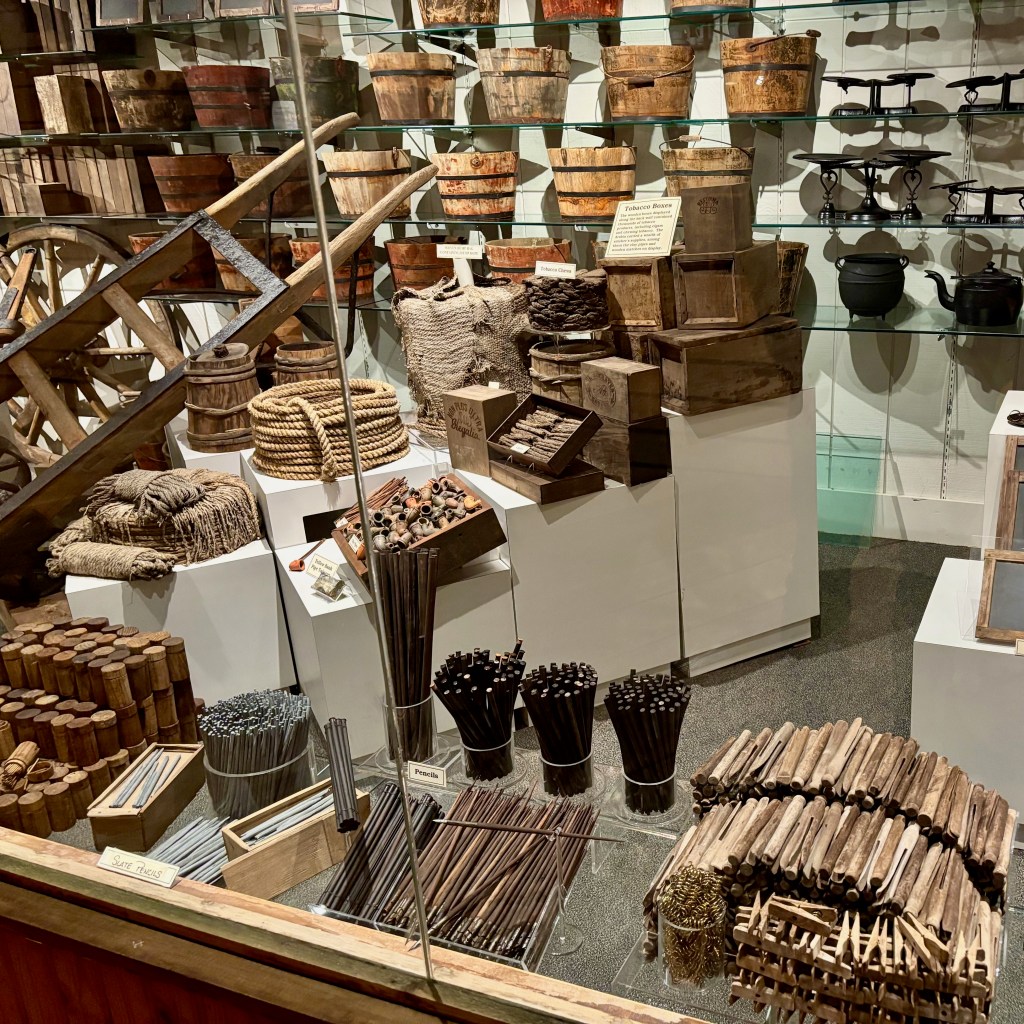
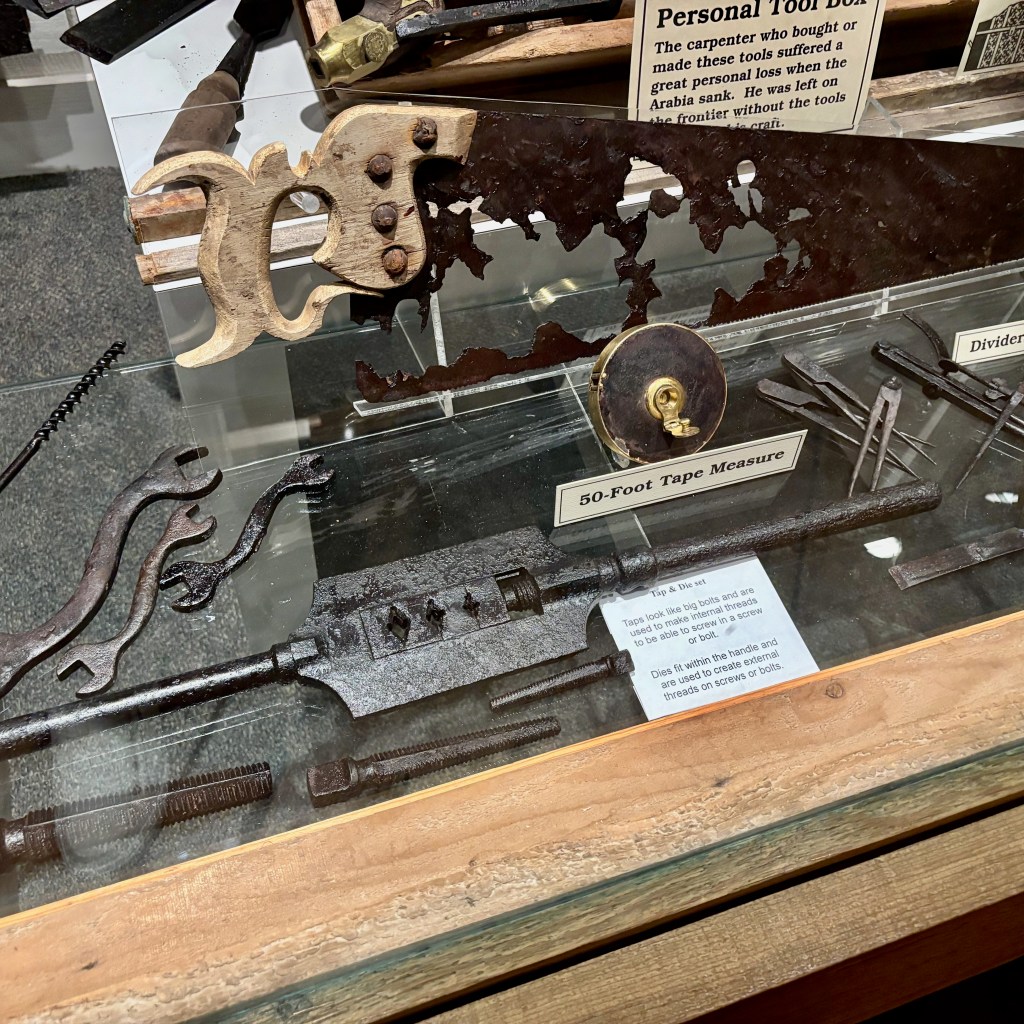
The story’s incredible. And the museum — which will close its doors this fall, more on that in a sec — is astounding, a portal to the past filled with everything a 19th century family might need. Saw handles and hammers. Buttons, beads and baleen for corsets. On and on and on. Some objects — wooden buckets, fine china, tin cups — hardly need labels. Others do. We puzzled over the pipe bowls. (Pipes were two-parters back then: Pack your tobacco in the bowl, add a stem.) A measuring tape with a hand crank. And bedkeys, the wrench used to tighten the ropes that hold up your saggy bedding. What’s that you say? That’s what memory foam’s for? Tsk, tsk. Can we talk about the scrimshaw busk? (No? But lovesick sailors… No? But it’s for a corset. Fine. I’ll save it for another day.)
The Arabia Steamboat Museum will close on Nov. 13, its lease lost and city redevelopment plans underway for, according to KHSB news coverage, more retail, a hotel and underground parking. (A parking lot. Excuse me, while I die a little inside.) So you have five months to go see this gem, maybe check out some delicious Kansas City barbecue, while you’re there. The Hawleys are looking for new digs, but who knows? If you don’t have Missouri travel plans, the museum offers virtual tours ($5.50), but then you wouldn’t get the full experience. Your nose pressed against the display glass. Your jaw dropping as Matt Hawley says, oh, those bottles of elixirs, preserved fruit and green pickles? They’re the real thing. Those are 1856 pickles. And they taste perfectly fine.
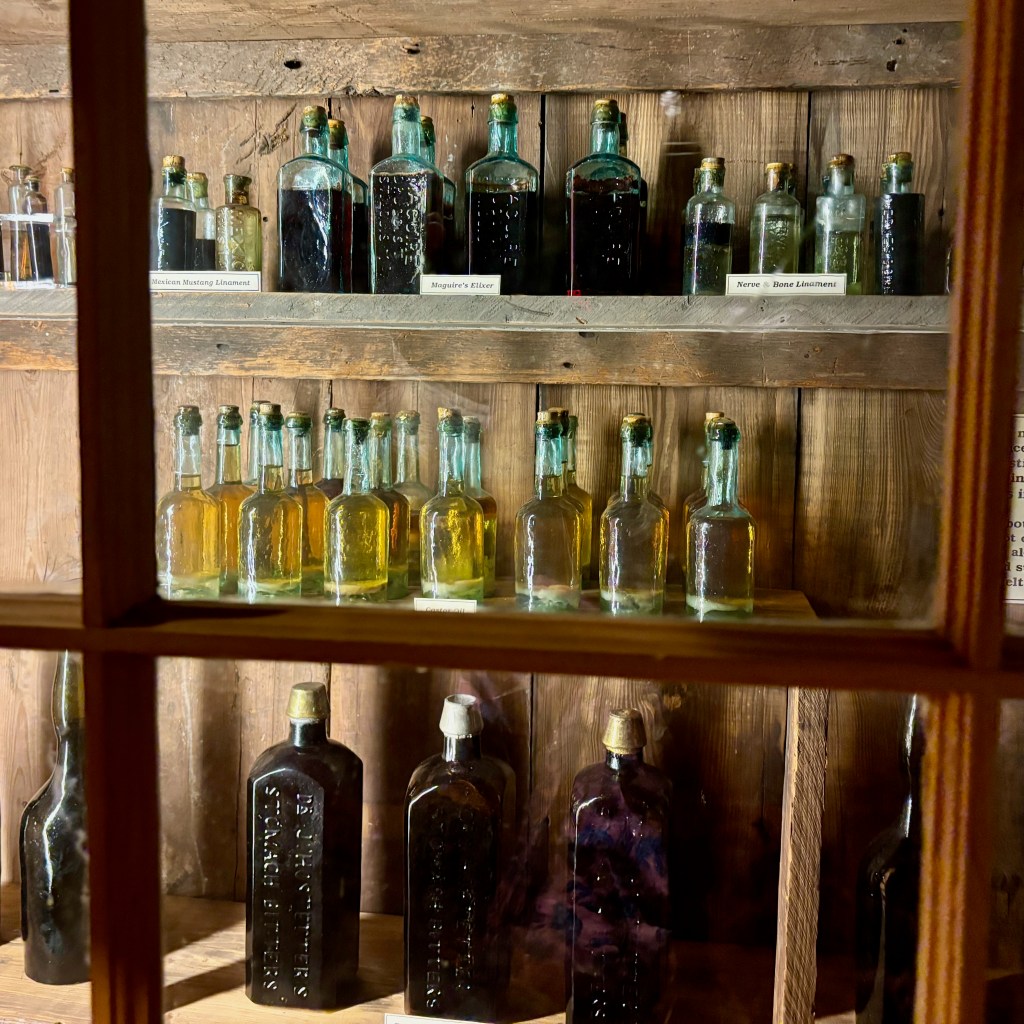
Oh, he tasted them. Not me. When I say I’ll do nearly anything in the name of research, I do mean “nearly.” I don’t like pickles.
 Jackie Burrell, Writer
Leave a comment